Steps to Take After a Storm Damages a Tree
Assess the Situation from a Safe Distance
After a storm passes, the first instinct is often to rush outside and check on the property. But when a tree has been damaged, safety has to come before anything else. High winds can leave branches hanging precariously, trunks split in ways that are not immediately obvious, and root systems compromised. Approach the tree slowly and keep a safe distance. Look up as well as around. A hanging limb, sometimes called a widowmaker, can fall without warning. If the tree has struck a structure like a roof or a vehicle, do not try to move it. The weight and tension involved can cause further damage or injury. Instead, note what you see and move to the next step.
Check for Immediate Hazards
The most serious risk after a storm is a downed power line. If a fallen tree has brought a power line down, stay at least thirty feet away and keep everyone else away too. Assume the line is live even if it looks dead. Call the utility company right away and report the exact location. Do not touch the line or anything in contact with it, including the tree itself. If the tree is blocking a driveway or a walkway, do not try to drive over it or move branches that are near wires. The same caution applies if you smell gas. A tree strike can shift gas lines underground or damage an exterior meter. If you smell gas, leave the area and call the gas company from a safe spot.
Document the Damage for Insurance
Once the scene is safe, take photos and notes. Capture the tree from several angles, showing how it fell, where it landed, and any damage it caused to your home, fence, or other structures. This record is useful for insurance claims and for any contractor who will later bid on the work. Do not start cleanup before documenting, especially if you plan to file a claim. Many policies cover tree removal if the tree has damaged a covered structure, but coverage for a tree that simply fell in the yard varies. A quick call to your insurance agent can clarify what is covered and what your deductible is. Keep receipts for any emergency work you have done, such as tarping a roof or boarding a window.
Secure the Property to Prevent Further Damage
If a tree has punched a hole in the roof or shattered a window, the immediate priority is keeping the weather out. A tarp over the damaged area can stop rain from ruining interiors and preventing mold growth. Use screws or nails to fasten the tarp along the edges, but only if you can do so safely from the ground or from a stable ladder. If the damage is high or the roof is steep, call a professional. For a tree that is leaning but not fully down, the risk is that it falls onto the house or a neighbor's property during the next wind. Do not try to pull it upright or cut it yourself. A leaning tree under tension can snap or roll unpredictably. Rope off the area and keep children and pets away until a tree service can evaluate it.
Decide Whether to Do Anything Yourself
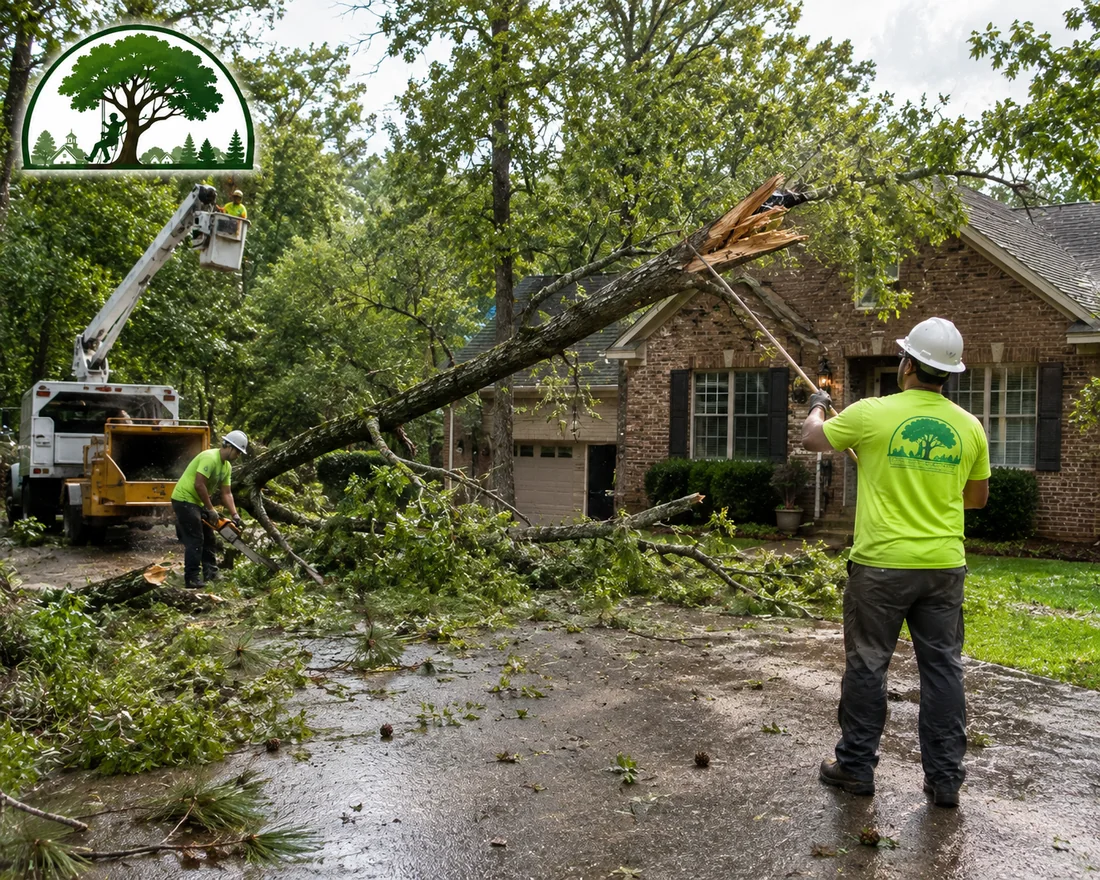
Not every storm-damaged tree needs a full crew. A small broken branch that is already on the ground can be moved by hand if it is not tangled with others. A branch that is still attached but clearly dead can sometimes be pruned with a pole saw if you can reach it from the ground and there is no overhead hazard. But any work that involves climbing, using a chainsaw above shoulder height, or cutting branches that are under tension is best left to experienced workers. The forces in a bent or twisted tree can release suddenly, throwing the saw or the branch back at the person cutting. The same applies to a split trunk. A tree that has split partway down may look stable, but the crack can widen as the tree sways. A professional can assess whether the tree can be saved or needs to come down entirely.
Call a Professional for Large or Dangerous Jobs
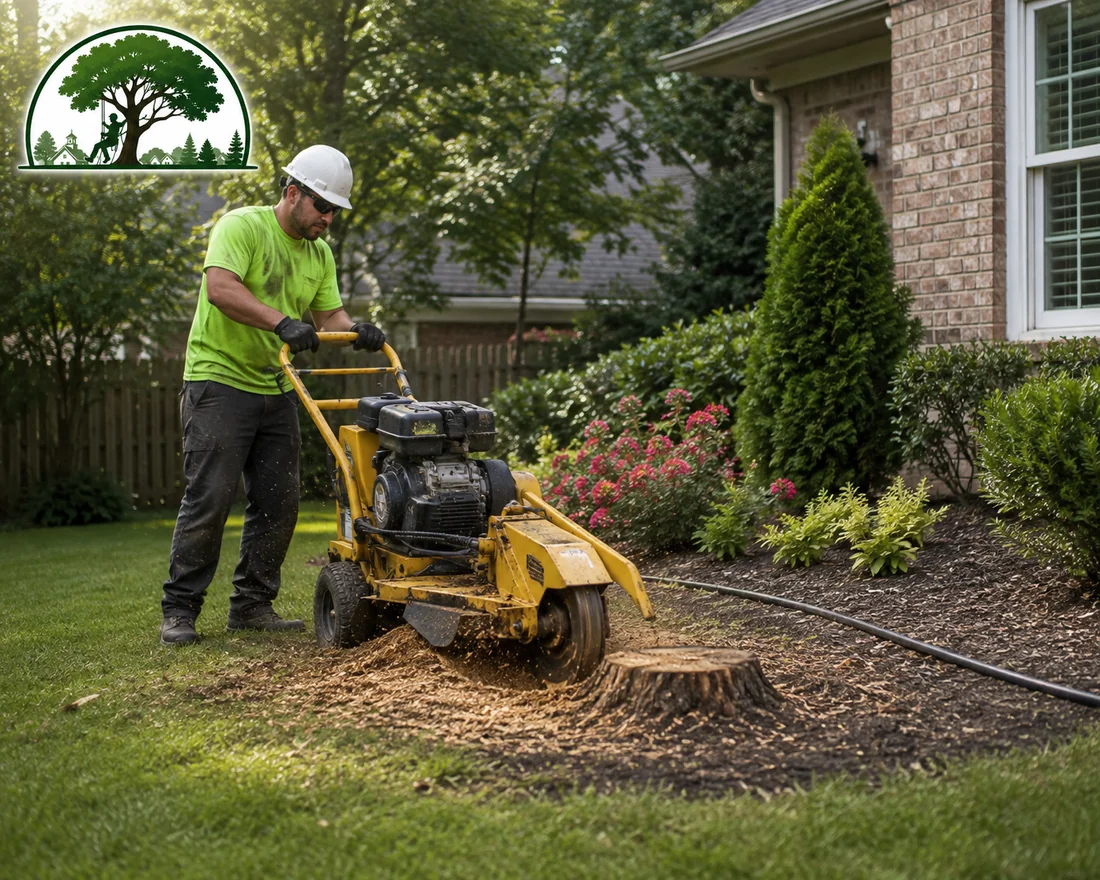
When the tree is large, the damage is complex, or the tree is near a house, power line, or road, it is time to bring in a tree service. A qualified arborist can tell whether the tree can be pruned back to healthy wood or whether the root system is too damaged for the tree to survive. They also have the equipment to remove heavy sections safely, piece by piece, without dropping them onto the house. For a fallen tree that is blocking a driveway or a street, a professional crew can cut and remove it much faster than a homeowner can, and they will know how to handle the debris afterward. Stump grinding and debris cleanup are often part of the same job, so you do not have to deal with leftover logs and brush. If you live in Dallas, Georgia, a local company like Tree Service Dallas GA can respond quickly after a storm, assess the situation, and handle everything from removal to cleanup.
Plan the Removal in the Right Order
If the tree has to come down, the removal process follows a logical sequence. First, the tree service will stabilize the site, especially if the tree is leaning against a structure or tangled in wires. They may use ropes and rigging to control how each section falls. Then they cut the tree into manageable pieces, starting from the top and working down. This reduces the weight and prevents the trunk from rolling or shifting. After the main trunk and larger limbs are removed, the crew grinds the stump if that is part of the agreement. Finally, they clean up the debris, leaving the yard as close to its original condition as possible. For a tree that has already fallen, the order is similar but the cuts are planned to avoid tearing the bark or damaging the surrounding area. A good tree service will also advise you on whether the remaining tree can be saved or if it should be removed entirely to prevent future hazards.
Prevent Future Storm Damage
Once the immediate crisis is handled, take a look at the other trees on your property. A tree that lost a limb in a storm may have other weak branches or decay that made it vulnerable. An arborist can identify problems like a split trunk, root rot, or a heavy lean that could cause trouble in the next storm. Regular pruning, especially deadwood removal and crown thinning, reduces wind resistance and makes the tree less likely to fail. For trees that are too close to the house or have shallow root systems, removal might be the safest long-term choice. If you are replanting after a tree is taken down, choose species that are native to the area and known for wind resistance. In Dallas, Georgia, the climate supports a variety of sturdy trees such as oaks and maples, but even they need proper care to stay healthy.
Know When to Act Fast and When to Wait
Not every damaged tree requires an emergency response. A tree that has lost a few small branches can wait a day or two. A tree that is leaning over the house or blocking the only driveway needs attention right away. The difference often comes down to risk. If the tree is likely to fall in the next storm or if it is already causing damage to the roof or foundation, speed matters. But even in an urgent situation, do not skip the safety checks. A professional service like Tree Service Dallas GA has the training and equipment to handle emergencies without putting anyone in danger. They can also help you prioritize when multiple trees are damaged. Start with the ones that threaten structures or access, then move to those that are simply unsightly. The goal is to restore safety and order without rushing into a job that is beyond what a homeowner can manage alone.
Storm damage to trees is stressful, but taking the right steps in the right order makes the situation manageable. Assess from a safe distance, document the damage, secure the property, and call in professionals for anything that involves height, tension, or heavy weight. With careful planning and the right help, your yard can recover and your other trees can be better prepared for whatever weather comes next.